

In a time when financial, political, and AI pressures on higher education seem to be at an all-time high, it makes sense for colleges to be cautious. When the future is uncertain, it is natural to approach marketing with caution.
During uncertain times, colleges naturally want to be cautious. But being overly careful with revenue-driving departments like admissions and advancement can be a penny-wise/pound-foolish strategy (one of my favorite phrases from a previous boss). Cutting marketing resources for areas that generate revenue can backfire, potentially creating a downward spiral.
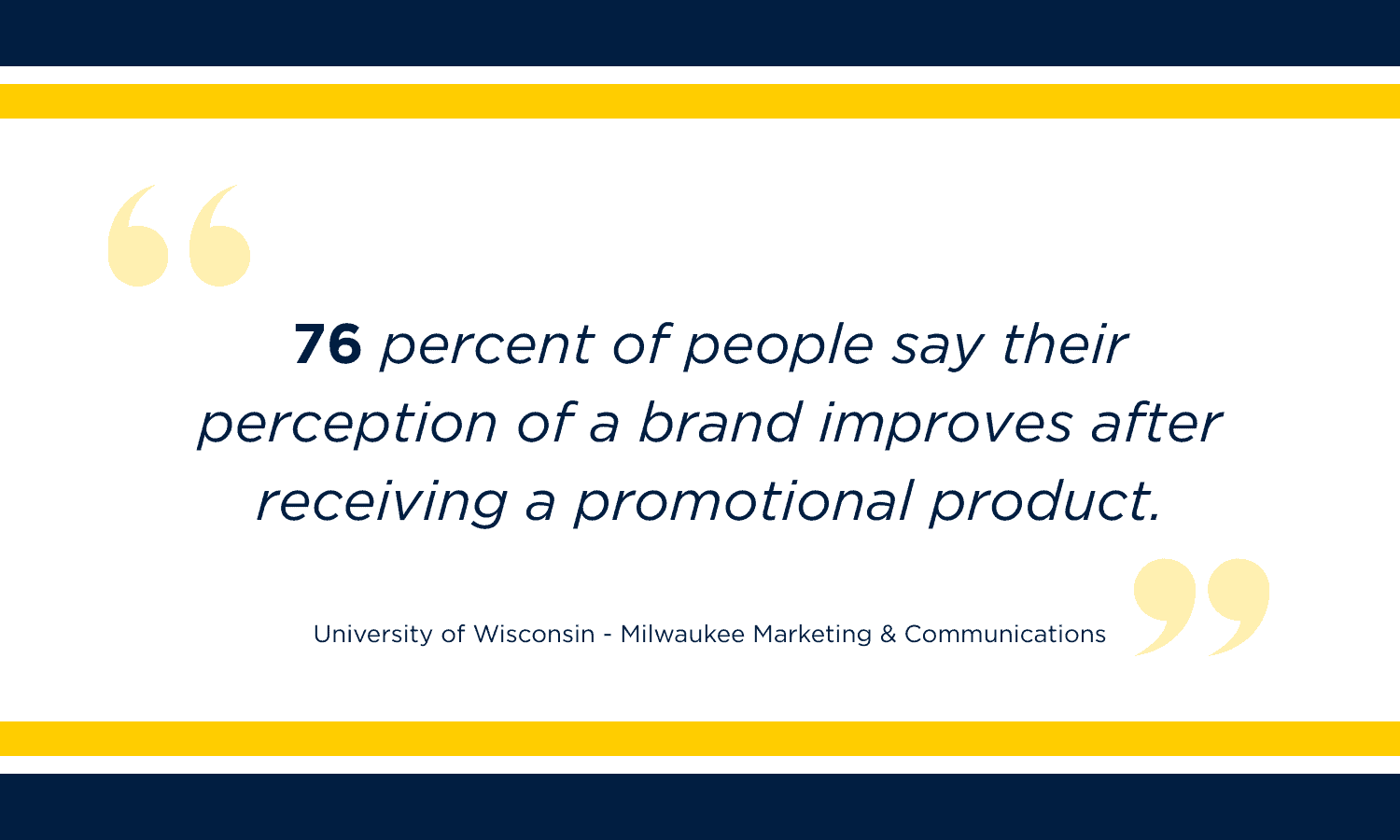
Of course, we offer marketing solutions, and I strongly believe that branded merch is an integral part of any collegiate marketing campaign. Students are excited to receive it. They use it and wear it, implicitly endorsing their college to peers and communities. This type of peer-driven promotion is more important than ever, as recommendations from friends and family are highly coveted. Beyond building enthusiasm and loyalty, branded merch delivers measurable return on investment: according to UWM, 76 percent of people say their perception of a brand improves after receiving a promotional product. That combination of engagement, peer endorsement, and tangible impact makes branded merchandise one of the smartest investments a college can make in its marketing efforts.
That being said, when colleges are looking to cut costs, we wanted to provide a few branded merch strategies for admissions offices to reduce overall spend. These include:
- Segment Your Audiences. Use data to identify the most engaged prospects to segment the class. One strategy could be to tier the admitted pack experience so that only the most likely students receive the expensive or high-impact merch. Another example is to rethink what’s given out during daily visits. As we outlined in a blog post, not all tour attendees are equally far along in the funnel, so it can be more cost-effective to save higher-value merch for students who have shown stronger interest, and provide lower-cost (but still meaningful) items to those earlier in the process.
- Rethink mailings. Look at your mailings to see if they can be simplified and reduce costs. The University of Iowa is a great example. They swapped expensive print mailings for instant emails and low-cost sticker postcards, saving money and creating a more exciting, timely experience for students.
- Reduce costs for mailings. Mailing merch to students can be a significant investment. There are several ways to cut the costs on these. These include:
- Reduce the number of items
- Use less expensive merch
- Implement blank packaging
- Mail via an envelope vs. a box
- Choose lighter items that reduce postage costs.
Each of these tactics helps lower production and postage expenses without sacrificing the ROI that well-chosen branded merch can deliver.
- Opt-in Strategy. A recent trend we’ve seen is allowing admitted and/or committed students to choose branded merch from an online site. Our experience is that not all students partake in these (mainly the students who actually attend end up selecting a product). Because only the most engaged students typically participate, opt-in programs naturally improve ROI. Colleges spend less while directing merch to the students most likely to enroll and use it. Learn how George Washington University deployed this strategy.
Even in uncertain times, a thoughtful branded merch strategy can keep your college top of mind while managing costs. By segmenting audiences, simplifying mailings, and leveraging opt-in approaches, admissions teams can maximize impact without overspending.