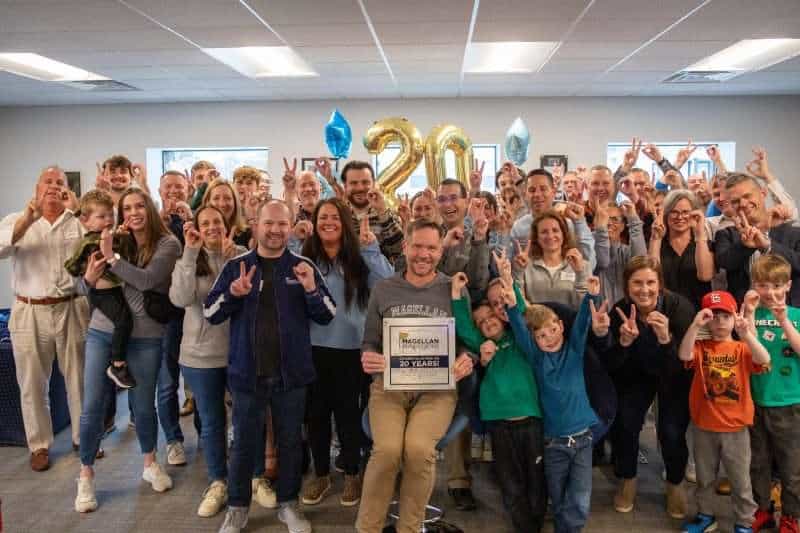

Running a business for 20 years has taught me more lessons that I can count. To be honest, I never dreamed of running a business. But here I am and am amazed at what we have been able to accomplish.
With our 20th anniversary, I wanted to share some of these lessons. Hope you find it helpful and provide ideas as you navigate your world.
- Learn From Others – I am an independent soul. I like to do things my way and learn as I go. I took this approach to my business and I wish I could go back and make more of an effort earlier in my career to learn from others. Now, I have trusted groups who I get counsel from. The folks in these groups are incredibly helpful and impactful to me and the business.
- The More We Grow, the Less I Know – This is a humbling realization. But so true. Successfully running a $1 million business was different when we grew to $3 million. When we grew to $5 million, the business changed and my role evolved. Now, we are on the cusp of $10 million and what the business needs from me continues to evolve. Each step in growth shows me more of what I don’t know and contributes to my dedication of life-long learning.
- Investing In Staff Pays Off – When I hired my first full time employee, Jenifer White, she was fresh out of college. I paid her more than I was paying myself. That was a hard pill to swallow. But I knew that if I didn’t hire this role, I would be forever stuck doing all of the roles in the business and thus never grow. The investment was well worth it and I am in debt to Jennifer for taking a chance on my business. I remind myself of this lesson each time I am struggling to decide on the next staff investment.

- Take Chances – I have failed on so many initiatives through the years. I get embarrassed when I think about them. Transfer Times! Ouch, that one hurt. But each failure had taught me lessons and pushed us forward as an organization. We are much better for failing than never trying. Even though they hurt the ego.
- Prioritize The Staff – We are a human capital business. We are nothing without the staff who put in the work everyday. It is easy to say you want to prioritize the team. But how it shows up is through retention and how the staff feels about the organization and leadership. To that end, we have built employee-led culture teams, transitioned to a hybrid remote work structure, run a 4-day work week, and offer professional development opportunities. We regularly survey our team to see how we are doing and work to ensure we prioritize the identified challenges. This dedication to the team has led to strong retention.
- Business of Expertise – The single most important advice I received in positioning the business was to specialize. With so much competition in business, the need to stand out is imperative. Through trial and error, we landed on creating a specialty with helping colleges solve their recruitment and fundraising challenges. Our annual growth routinely outpaces the industry average. We attribute our growth to our dedication to this specialty.
- Experiences Outside of Work Add Value – Experiences that I had outside of work have helped me be a better leader for my business. These include serving on committees, through my church council and on alumni boards. Even parenting has taught me more leadership lessons than I expected. I learn from all of these experiences, making me and the business better. So when I talk to students in college, I always strongly encourage them to get involved in clubs to get leadership experiences to start getting these lessons now.
- Lesson From my Mom – My mom got into sales later in her career and she was very successful. She worked incredibly hard and created opportunities for her to succeed. Her super power was cultivating relationships. She became true friends with her clients. She enjoyed learning about their lives and having fun with them. Once she gave me three hats from Florida colleges when her client lost a sports bet to her. He paid up his side of the bet out of his own pocket. I even owe my first professional job to my mom; one of her clients was looking for a job and my mom referred me. As I built my business, I never forgot the power of relationships and how important they are. I am lucky to have my mom mentor me on this important lesson.
- Lesson From My Dad – My dad, also in sales, sold computer systems. I grew up watching him take amazing sales reward trips. Some of my parents’ most memorable vacations were on these trips. While my company is on a different scale (my dad worked for very large businesses), the lesson is to take the time to celebrate the wins. Sales is hard because when you hit your goal, the goalposts move and you’re immediately faced with a new challenge. It’s easy to push ahead to the new goal. It takes leadership to ensure you hit the “pause button” and congratulate each other and celebrate the wins. While we have not had dinner in the Palace of Versailles in France, we have had memorable celebrations when we hit our sales goals. And I am proud of that.

- Is it luck or hard work? – I used to listen to the podcast “How I Built This” by Guy Raz. The last question he would ask each founder is “Do you attribute your success to luck or hard work?”. I grew to disdain this question because anyone who talked about their hard work leading to their success did not fully understand how much luck plays in a person’s life. To be clear, hard work is a component of success. No doubt. But luck is much more than having the right client believe in you at the right moment. Luck goes all the way back to the beginning of life. Luck is being born in a country where you have the opportunity to succeed. Luck is having the chance to get a full education. Luck is having a family that provides food, shelter and love. Luck is not having to start out on the bottom rung of Maslow’s Hierarch of Needs. What you do with that luck is up to each person. But I certainly would not have been in the position to start my business without the luck that I did not choose.
So here’s to the first 20 years of Magellan Promotions. I wouldn’t be here without my team, without our clients, or without the lessons I’ve learned along the way. On our 20th anniversary, we’ll take time to celebrate our successes as we look forward to the future. Thank you for being a part of Magellan’s journey!