
If you work in advancement or annual giving, you already know this feeling: you’ve put together a compelling giving day campaign, your emails are well-crafted and well-timed, and you’re tracking every open rate and click-through. And still, the vast majority of your alumni will not give.
That isn’t a failure of effort. It is a structural challenge. The average alumni giving rate at U.S. colleges and universities sits around 7.8%, down from roughly 20% in the 1980s. Meanwhile, 72% of alumni report experiencing solicitation fatigue, meaning every message from their alma mater feels like an ask before they have even opened it. When every touchpoint feels like a transaction, it’s hard to build the kind of genuine connection that moves someone from passive observer to active donor.
Give-to-get campaigns, where a branded piece of merchandise is offered as a thank-you for making a gift at a certain level, are one of the most effective tools advancement teams have for breaking through that barrier. Done well, they don’t just drive a single donation. They convert new donors, grow average gift size, and build the giving habits that compound into long-term fundraising revenue.
Here’s how the ROI case breaks down across three distinct levers.
Lever One: Conversion (Turning Non-Donors Into First-Time Givers)
The hardest ask in higher ed fundraising isn’t getting a loyal donor to upgrade their gift. It’s getting someone to give at all. It can take eight or more meaningful touchpoints before a non-donor makes their first gift, and most digital channels struggle to create touchpoints that feel meaningful rather than transactional.
This is where a multi-touchpoint giving strategy anchored by a give-to-get offer changes the equation. Each outreach, whether it’s an email, a direct mail piece, or a social media post, reinforces the same compelling exchange: make a gift and receive something tangible in return. The offer gives every touchpoint a reason to exist beyond the ask itself, and it gives the alumni a concrete reason to act at whatever moment reaches them.
A well-designed give-to-get offer also changes the psychology of the ask in a way that digital channels can’t replicate on their own. Instead of “please donate to your alma mater,” the message becomes “make a gift, and we’ll send you this.” The exchange feels fair. It feels concrete.
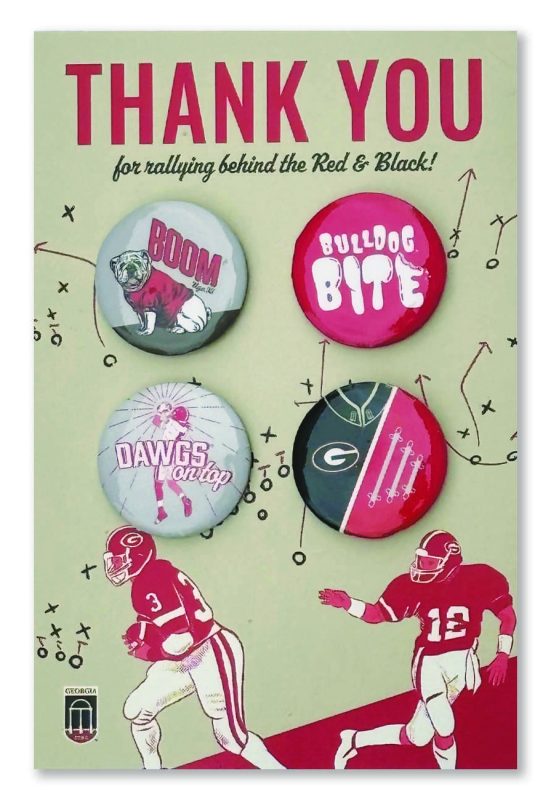
Lowering the entry point is equally important, especially for recent grads who may be giving for the first time. The University of Georgia offered a four-pin set as the give-to-get reward for a donation of just $5. The result: more than 3,000 new donors joined during that campaign. What’s especially telling is that the average gift climbed to $25, well above the minimum threshold. The low barrier to entry drove volume without sacrificing revenue, bringing thousands of first-time donors into the pipeline who can be cultivated for larger gifts in the years ahead.
For annual fund drives and giving day campaigns alike, the combination of a low minimum donation, a desirable gift, and consistent multi-touchpoint outreach is one of the most reliable formulas for moving fence-sitters into the donor column.
Lever Two: Gift Size (Giving Donors a Reason to Stretch)
Once you have an alumni donor’s attention, the next question is how to encourage them to give more than they originally planned.
Tiered give-to-get structures are one of the most reliable mechanisms for nudging donors up the ask ladder, and Northern Arizona University offers a clear example of how to structure them effectively. During their giving day campaign, donors whose cumulative gifts reached $75 to $125 unlocked access to a Giving Day Donor Appreciation Shop, where they could choose from a selection of NAU-themed merch. Donors giving $125 or more gained exclusive access to a limited-edition pair of NAU Giving Day socks, with a choice of design and materials. The tiers gave donors a specific, tangible reason to stretch their gift, and the element of choice at each level added a sense of personalization and agency that made the upgrade feel worthwhile. It’s a detail that tends to lift both conversion and gift size at the same time.
For alumni membership programs, tiered give-to-get structures are especially powerful. Reframing an annual gift as a membership, with different levels offering different benefits anchored in quality-branded merch, transforms the ask from a donation into an identity. “I am a member at the Founder level” carries meaning in a way that “I donated last year” doesn’t. That sense of belonging to something drives both higher initial gifts and stronger year-over-year retention.
Lever Three: Retention (Building the Habits That Drive Long-Term ROI)
Here’s the number that should inform every alumni giving strategy: First-time donor retention hovers around 20%. That means four out of five first-time donors never give again.
But donors who give repeatedly renew at dramatically higher rates. According to the Fundraising Effectiveness Project, donors who’ve given three to six times retain at a rate of 62.5%, and those who’ve given seven or more times reach 87.3%. The difference between a one-time donor and a loyal annual contributor isn’t wealth or affinity; it’s habit. And habits are built through repeated, rewarding experiences.
This is where give-to-get campaigns have a compounding ROI that’s easy to underestimate. A first-time donor who had a positive giving experience, who made a gift, received something they genuinely liked and felt good about the exchange, is far more likely to give again the following year. The branded item isn’t just a conversion tool. It’s a year-round reminder of the giving decision your donor made and a physical touchpoint that keeps your institution present in their life.
There’s also a deeper psychological lever at work when you introduce collectibility into the equation. When donors know that each year’s give-to-get item is different, limited, and not available any other way, collecting the series becomes part of the motivation. Missing a year means missing an item that can never be obtained again, which is a surprisingly powerful driver of renewal.
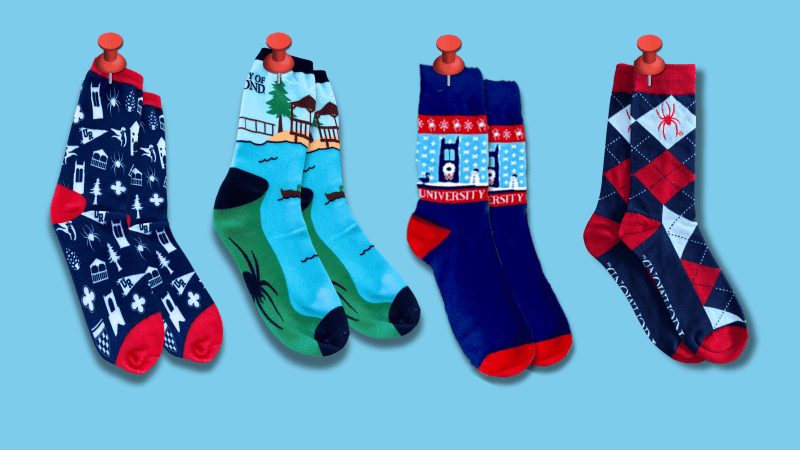
The University of Richmond has built this into the foundation of their annual giving strategy. For the past four years, they’ve offered a pair of limited-edition, collectible socks as the give-to-get gift for donations of $25 or more. The campaign has been so consistently successful that it’s now a cornerstone of their program, with donors returning each year not just out of loyalty but out of genuine enthusiasm for what the next pair will look like.
Donors acquired through a give-to-get offer often come to expect a tangible reward as part of their giving experience. Building a give-to-get offer into your annual fund strategy the following year (with a new or updated item) meets that expectation and gives lapsed donors a concrete reason to re-engage.
Putting It Together: Give-to-Get Across the Advancement Calendar
The most effective give-to-get strategies aren’t one-off campaigns. They’re integrated across the advancement calendar, with different offers designed for different moments:
- Giving days: Use give-to-get tiers to drive first-time gifts during a high-energy, time-limited campaign window. The combination of urgency and a tangible gift is especially effective at converting fence-sitters, and a low-entry-point offer can bring in first-time donors at scale, as the University of Georgia demonstrated.
- Annual fund drives: Build tiered give-to-get offers into your annual fund ask to grow average donation size and reward consistent giving. Feature the merch prominently in your communications, and consider introducing a collectible element to build year-over-year renewal momentum, as the University of Richmond has done so effectively.
- Alumni membership programs: Use branded merchandise as the anchor benefit of annual membership tiers. Offer choice at higher giving levels to add personalization. Refresh the merchandise each year to incentivize renewal and give members something to look forward to.
Across all three contexts, the logic is the same: merch is a catalyst, not a cost. It lowers the barrier to a first donation, provides a reason to give more, and creates a rewarding experience that makes donors want to come back. The institutions that understand this aren’t just running smarter campaigns. They’re building the kind of alumni giving culture that sustains advancement programs for decades.