Challenge: Rethinking How Institutions Thank Their Donors
Cornell University wanted to rethink the traditional “give-to-get” alumni engagement strategy for alumni donors. Instead of automatically sending a branded gift, they were looking for a more thoughtful, donor-first approach that offered greater flexibility for opting in.
The goals were clear:
- Give donors the power to choose their appreciation gift
- Provide the ability to opt out of receiving a physical item altogether
- Reduce waste and align with Cornell’s sustainability values
- Continue to offer merch that felt meaningful, modern, and on-brand for alumni
- Stand out with a new, forward-thinking approach
Cornell’s primary audience included current donors from undergraduate, graduate, professional school, and parent communities who had given between FY20–24 but had not yet renewed in FY25, as well as engaged non-donors and donors who gave at some point in the past five years, but not in the current year. Special messaging was needed for parents of seniors, for whom the gift carried an added dimension (a meaningful token to celebrate their student’s upcoming graduation). The campaign was centered around a $100 giving threshold, a level Cornell’s data identifies as a “golden” benchmark: donors who give at this level are significantly more likely to become loyal, repeat contributors.
While choice stores are still newer in the donor and alumni space, Cornell saw an opportunity to lead the way, embracing a more modern, donor-first approach that aligned with their values and positioned them at the forefront of alumni engagement innovation.
Solution: Introducing Choice to the Alumni Give-to-Get Experience
Magellan partnered with Cornell to implement a choice store designed specifically for alumni and donor engagement. After exploring the potential of choice-based programs together, Cornell was excited to lean in and bring this innovative approach to life.
The choice store enabled Cornell to:
- Fulfill merch based on donor preference rather than assumption
- Offer donors the option to decline a physical gift
- Reduce unnecessary production and shipping by aligning fulfillment with true demand
Cornell hosted the choice store on their own platform, allowing them to retain full ownership of donor data while keeping the entire experience seamless and secure. By integrating the store directly into their existing portal, they avoided adding extra clicks or redirecting donors to a separate site, preserving a streamlined, frictionless giving journey.
The campaign ran across two channels. A direct mail campaign launched April 25th and ran through May 16th, with gifts beginning to arrive as early as the following day. An email campaign followed from May 7th through May 16th, deploying three touchpoints: an initial outreach on May 7th, a follow-up on May 12th, and a final reminder on May 16th. The two-week window was intentional in creating a sense of urgency that encouraged lapsed donors to renew before the close of the fiscal year.
Magellan supported the experience by:
- Guiding product innovation and curated item selection
- Advising on product presentation, including virtual renderings and artwork for the donation portal
- Managing post-selection fulfillment to ensure a seamless donor experience and timely delivery
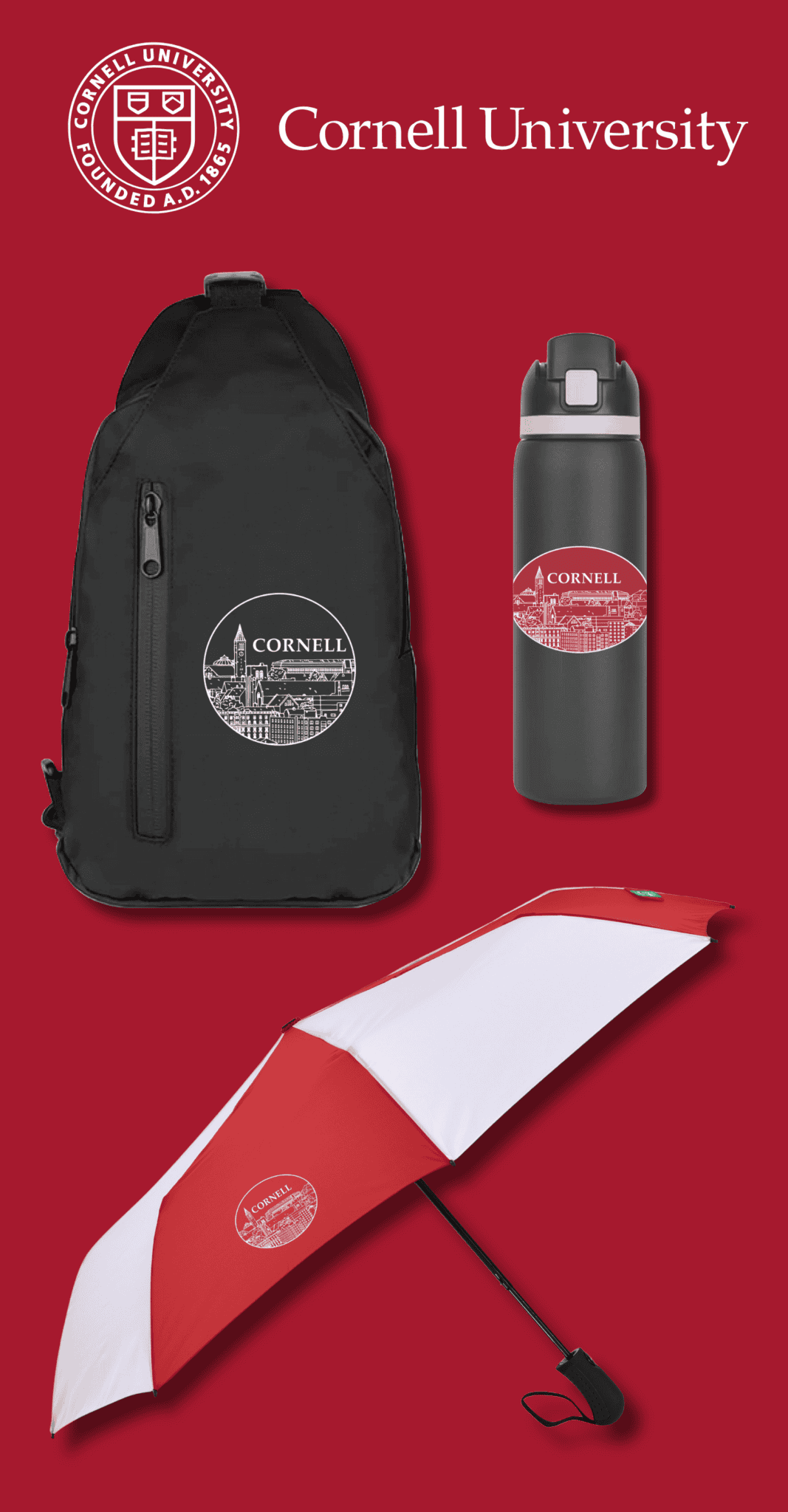
Together, the teams curated a collection of branded merch that balanced alumni pride, practicality, and sustainability, including:
- An eco-friendly smart umbrella powered by that could be paired with the RainAlertz app (a free weather app that notifies users to bring an umbrella based on percentage chances of rain in their area)
- An ocean-plastic sling bag
- A two-toned water bottle inspired by one of today’s most popular drinkware trends
Cornell leaned into Magellan’s expertise throughout the process, trusting recommendations that aligned with both alumni preferences and environmental responsibility.
Outcome: Early Success with a Donor-First, Sustainable Model
The choice store approach delivered a fresh, donor-centric experience that aligned with Cornell’s values and differentiated their campaign within the higher education space.
Among alumni, the sling bag claimed the top spot, with the umbrella a very close second and the water bottle rounding out third. Staff selections told a slightly different story, The sling bag again led the way, followed by the water bottle, with the umbrella placing third.
The model also unlocked an unexpected operational advantage: by purchasing only what was needed based on actual donor selections, Cornell was able to be strategic about scale, buying additional inventory at a better cost per piece for use at other events.
As Katharine F. Conolly, Assistant Director of Integrated Marketing, Communications, Marketing, and Participation at Cornell’s Alumni Affairs and Development office, put it:
“The process of hosting this on our site and only printing what we needed worked great! It was a great way to be thoughtful about budget, resources, and fiscal responsibility. We were also able to take advantage of economies of scale and buy extra items for other events at a better cost per piece, while not overlapping in audience. It was a win-win for us!”
The program’s impact centered on:
- Sustainability: Products were fulfilled based on donor preference and shipped only to those who opted in, featuring responsible materials and options that aligned with Cornell’s values.
- Engagement: Alumni selected items they were genuinely excited about, reinforcing appreciation, pride, and connection to the university.
- Retention: The urgency of a two-week, end-of-fiscal-year campaign, anchored by a meaningful choice and a “golden” $100 threshold, proved especially effective at securing renewals from lapsed donors.
Differentiation: Cornell implemented an innovative give-to-get alumni engagement strategy in a space where choice is still emerging, positioning themselves as a forward-thinking leader in alumni engagement.